Car Won’t Start in a Winnipeg Winter? Causes, Quick Fixes and When to Call a Tow
When the temperature drops below -20°C, a car that started fine yesterday can refuse to turn over today. In Winnipeg this is one of the most common winter calls we get. Here is why it happens, what you can safely try yourself, and when to stop and call for help.
Why cars struggle to start in Winnipeg’s cold
The battery loses power. A battery produces less current as it gets colder, while a cold engine needs more power to turn over because the oil is thick. A battery that is three to five years old, or that was already weak in summer, often fails the first time it gets really cold.
Engine oil thickens. Thick oil makes the engine harder to crank, which asks even more of the battery.
Fuel and moisture problems. Water in the fuel system can freeze, and a nearly empty tank collects more condensation. Keeping the tank at least half full in winter helps.
Plug-in power was not used. A block heater keeps the engine warm enough to start easily. Many Winnipeg drivers plug in when temperatures fall to around -15°C or colder, a couple of hours before leaving.
What the sound tells you
- Fast clicking, dim dashboard lights: the battery is almost certainly too weak. A jump start usually solves it.
- A slow, groaning crank: weak battery or very thick oil. Try a jump start and let the engine warm up.
- Engine cranks normally but will not catch: this points to fuel, spark or a frozen fuel line, not the battery. A jump will not help.
- Complete silence and no lights: a loose or corroded battery terminal, or a fully dead battery.
How to jump start safely
Check your owner’s manual first, especially on hybrids and electric vehicles, which often have special jump points.
- Park the working vehicle close, but not touching. Turn both off.
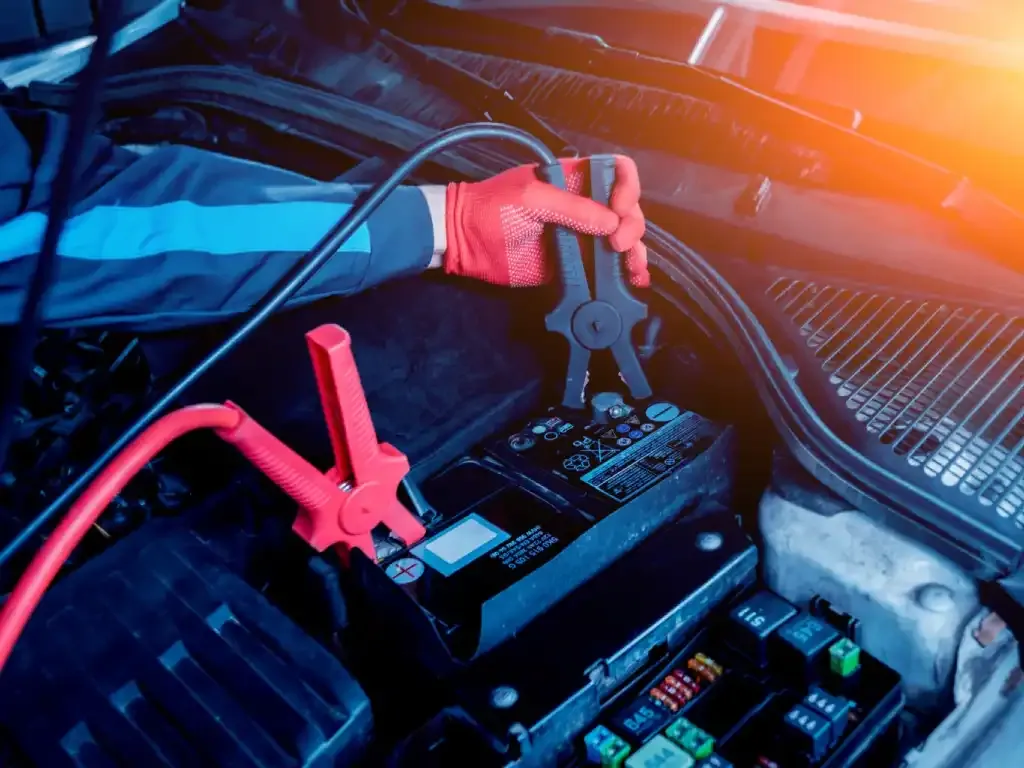
- Connect red to the positive (+) terminal of the dead battery.
- Connect the other red clamp to the positive terminal of the good battery.
- Connect black to the negative (−) terminal of the good battery.
- Connect the last black clamp to unpainted bare metal on the dead car’s engine, away from the battery.
- Start the good car, wait a few minutes, then start the dead one.
- Remove the cables in the exact reverse order, and drive for at least 20 to 30 minutes so the battery recharges.
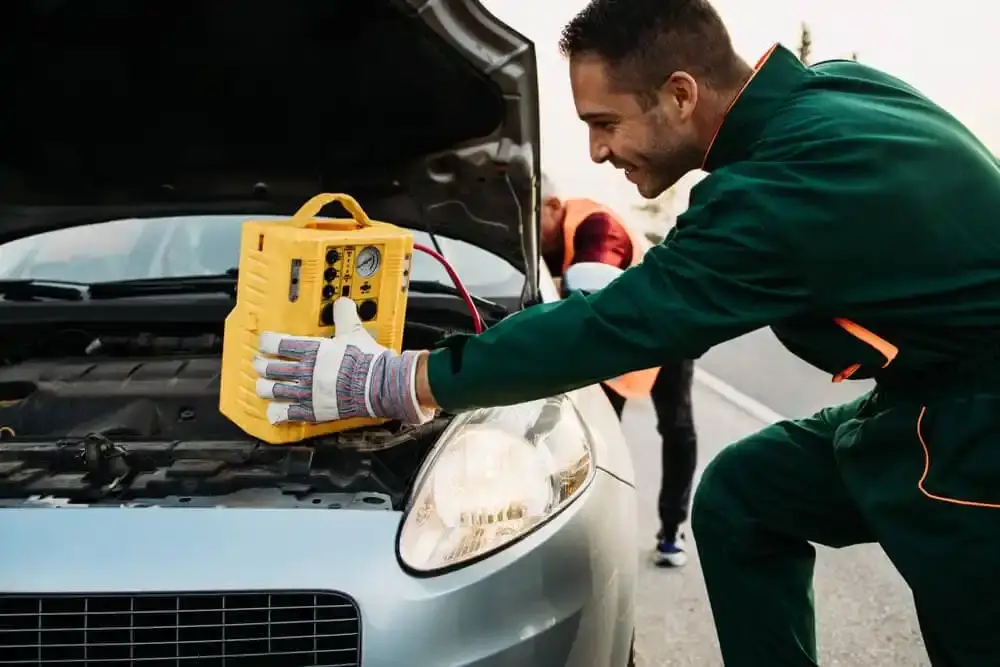
If cables, a second vehicle or the confidence are missing, our team will jump start your vehicle at your location, any time of day.
When a jump start is not enough
Call for a tow instead of trying again if:
- The car starts but dies again as soon as the cables come off. The battery will not hold a charge, or the alternator is not charging.
- You smell fuel or burning, or see smoke or leaking fluid.
- The engine cranks but never fires after a couple of attempts. Repeated cranking can drain what is left of the battery.
- Your vehicle is an AWD or electric model and you are unsure how to proceed. In that case a flatbed tow protects the drivetrain.
Prepare before the cold hits
- Have your battery tested before winter. Many shops do it for free.
- Replace batteries that are several years old.
- Clean corroded terminals.
- Use your block heater and keep a set of booster cables or a jump pack in the trunk.
- Keep your fuel tank at least half full.
Stranded? We are on call all winter
If your car will not start, stay in a safe, warm place and call us. We cover every Winnipeg neighbourhood and the surrounding area, 24 hours a day. See our full list of services or call us now.